
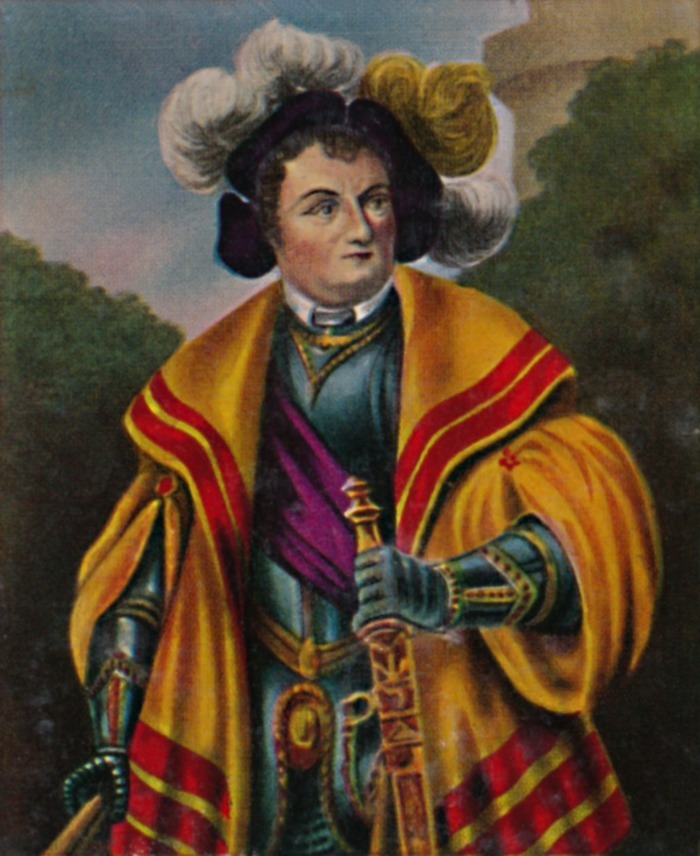
Today’s Leader of Faith
FRANZ VON SICKINGEN
Home Call : 07 May 1523
Non-Theological Reformer, Imperial Knight, A guardian of church reformation.
Franz von Sickingen (1481–1523) was a notable German knight and one of the most prominent figures during the early Reformation era. He is best known for his role as a military supporter of the Protestant Reformation and for championing the cause of the imperial knights in Germany. Sickingen was born on 2 March 1481 at Ebernburg Castle, located in the Palatinate region of the Holy Roman Empire. He was the son of Schweickhardt von Sickingen and Margaret Puller von der Hohenburg. He gained early military experience by fighting for Emperor Maximilian I during the War of the League of Cambrai against Venice in 1508. Following his father’s death, he inherited vast estates along the Rhine River, enhancing his power and influence.
As a member of the lower nobility within the Holy Roman Empire, Sickingen held the title of Imperial Knight. This meant he owed allegiance directly to the emperor, rather than to local princes, giving him a level of independence and influence in the empire. He played a crucial but short-lived role in the early Protestant Reformation, not as a theologian but as a military protector and political enabler of reformers. Though Franz himself never formally broke from the Roman Catholic Church, he sympathized with reformist ideas and despised clerical abuses. He admired the reformist movement led by Martin Luther, especially Luther’s stance against the abuses of the Roman Catholic Church. He saw the Reformation as both a spiritual and political opportunity to limit the power of the prince-bishops and elevate the role of the imperial knights. He used his castle at Ebernburg, as a refuge for early reformers and humanists like Ulrich von Hutten. The castle was sometimes called the “Hostel of Justice,” where reformers could discuss ideas free from the watchful eyes of the church and ruling authorities. He provided both physical protection and political backing for these figures. Sickingen became the military leader of the Knights’ Revolt (1522-1523), a failed attempt by lesser nobility to regain influence lost to the growing power of territorial princes and church authorities. He launched a military campaign against Richard von Greiffenklau, the Archbishop of Trier, hoping to replace clerical rule with secular, knightly governance. He fought in the name of religious reform and justice for the common people. However, the campaign failed due to the lack of widespread support and the superior military strength of the princes allied with the archbishop.
In 1523, Sickingen’s castle at Landstuhl was besieged by the armies of the Elector Palatine, the Archbishop of Trier, and the Landgrave of Hesse. His final stand took place at Landstuhl Castle, his last remaining stronghold. After suffering mortal wounds during the siege, he capitulated and died on 7 May 1523, marking the collapse of the Knights’ Revolt. He was buried at Landstuhl.
— John Michael, Rajahmundry