
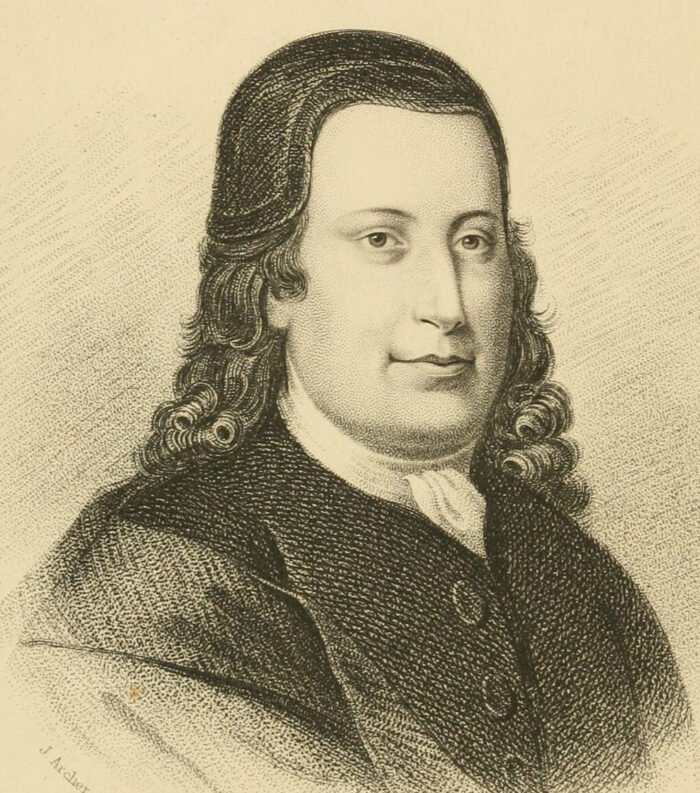
Today’s Leader of Faith
NIKOLAS VON ZINZENDORF
Home Call : 09 May 1760
Hymn Writer, Church Reformer, Christian Leader.
Nikolaus von Zinzendorf (1700–1760) was a German religious and missionary leader, best known for his role in founding the Moravian Church, a Protestant denomination with a strong emphasis on missionary work and piety. He was born on May 26, 1700, into the prominent House of Zinzendorf, as the only son of Count Georg Ludwig von Zinzendorf and Baroness Charlotte Justina von Gersdorff. As a child, he was deeply spiritual, often writing love letters to Jesus and tossing them from a castle tower. During the Great Northern War, Swedish soldiers were moved by his prayers. He attended Franke Foundations in Halle, where Pietism was strong, and later studied law at the University of Wittenberg with plans for a diplomatic career. He travelled widely in Europe, meeting people of various Christian denominations. His conversion experience occurred after viewing the painting Ecce Homo by Domencia Feti, where he felt the Holy Spirit and committed to serving Jesus.
In 1722, Zinzendorf offered asylum to persecuted refugees from Moravia and Bohemia, helping them establish Herrnhut on his estate. Though initially divided by differing beliefs, the community reconciled through Bible study and prayer, creating the Brüderlicher Vertrag (Brotherly Agreement), the Moravian Covenant for Christian Living. This spiritual renewal led to the “Moravian Pentecost” in 1727, marking the beginning of a period of growth and communal living. Zinzendorf, influenced by the Unitas Fratrum, saw the community as a means of renewing all denominations, not forming a separate one. He organized the community into age- and gender-based groups called “choirs.” In 1737, Zinzendorf was consecrated bishop and began sending missionaries to places like the West Indies and Greenland. Exiled in 1736, he became known as the “Pilgrim Count” and continued his missionary work, including a visit to Pennsylvania in 1741. His theology emphasized communal decisions and living as a Christian community.
Zinzendorf was a vocal critic of slavery and played a key role in launching the Protestant mission movement. He supported Moravian missionaries Johann Leonhard Dober and David Nitschmann in ministering to enslaved people in the Danish colony of Saint Thomas, despite facing opposition. Banishment from Saxony in 1736 didn’t end his mission work; in 1749, the government reversed its decision and invited him to establish more settlements like Herrnhut. Zinzendorf’s influence on the Moravian Church remains strong, and he is honored as a hymnwriter and church reformer by the Evangelical Lutheran Church in America on May 9.
Zinzendorf passed away on May 9, 1760 at the age of 59. His death marked the end of a significant era in the Moravian Church, but his legacy as a hymnwriter, church reformer, and pioneer of Protestant missions continues to be honored.
— John Michael, Rajahmundry